


Extended extracts from Who Killed Oswald Grey
Posted on November 4, 2025
Here are some extended extracts from Who Killed Oswald Grey? I hope you enjoy them and I’d be delighted if you then decided to buy the book!
At 8 o’clock on the morning of 20 November 1962, 20-year-old Oswald Augustus Grey was taken from his cell in Winson Green prison in Birmingham and hanged. It was the last execution in that place. Five more men were executed in England until the abolition of the death penalty took effect in 1965.
Grey had arrived in the country in 1960. In a commonly repeated pattern, his father, Felix, had left Jamaica some years earlier and then arranged for his children to join him when money and circumstance allowed. Oswald was the first to arrive.
On 2 June 1962, Thomas Bates was shot dead in what appeared to be a bungled robbery in the newsagent shop which was part of the house where he lived with his mother on Lee Bank Road.
Oswald Grey was arrested on the following Wednesday and was then remanded in custody until his trial for murder on Monday 8 October 1962. He was found guilty and condemned to death four days later on Friday 12 October. His appeal against the sentence took place on Monday 29 October and was over in less than an hour.
There was an attempt to attain a reprieve from the Home Secretary, but this came to nothing and so, on that November morning, the execution took place. There were fewer than 25 weeks between the death of Thomas Bates and that of Oswald Grey.
The judicial system was careless and hasty in its disposal of Grey. He had no well-connected advocates and he lived in a time of deference toward the state and its self-preserving institutions. He was easily dispensable.
This all took place in a time when news did not travel fast and outrage had few public outlets. His story, even among Birmingham people of Jamaican heritage, is more than just forgotten – it is practically unknown.
What follows tells this story through real and imaginary eyes. It is an important one because, forgotten as it may be, it speaks to us about what we know of race and class more than sixty years on. And we will see that, as with so many Black boys in the following decades, Oswald Augustus Grey was not afforded true justice.
*****************
Felix. Birmingham. 1960
Trouble and danger. Deep in his soul, Felix has known that the boy would always court them.
Pray and hope, then, that getting him to this England might have given him a chance. The others, the babies, they had to wait their turn. This first-born boy, though, this wayward sprite – he it was who should cross first: have his chance of salvation.
But once here, soot and smog, drizzle and grime, they have suffocated hope. Once here, in the chill and the damp, the boy has swerved to bad company. Magnetised by villains, chancers and bullies, he has stumbled, stumbled again into the wasteland of stupid transgression.
Just as he had back in Bog Walk. The sun may have shone and the boy may have run freer, but the thefts and the pranks, the dumb willingness to follow the sniggering leader, the sullen lippiness in the face of authority – all of these had captured him. Not for this boy the innocent childhood roundabout of stifling school and tedious chores, leavened by the gleeful release of hide-and-hope and the loafing of adolescence. He was marked at an early age: a scoundrel, one to be watched.
Days may have started off on the dusty road to the Tulloch schoolhouse, but his destination was elsewhere. Sloping away to the noise and cheery fug of the stalls, dives and lazy disorder of the shabby town. The illicit bookies’ runner, he dips deftly into the cashbox while hawkers gossip. Cigarette packets slide into his pocket while punters leer at the bargirls or let the moonshine fog their minds. The useful idiot for bad company, he is an easy mark for indolent police. His roadway is being mapped out.
For him it was the path to the approved school at Stony Hill. There, with the cadet force of his fellow offenders, three of his precious teenage years crumbled to dust. Out of the way of trouble but learning how to be troublesome. His so-called education in this ‘industrial school’ is just a few steps up from the life of the child labourers of his heritage.
For the boy, the words on the page have never been more than so many tadpoles, scratches and whirling spools. All the spittle-flecked fury of the dragoness and all the sharp stings of switch on calf made not one jot of difference. Meaning evaded him. Books shone no light on his befuddled world. For this, his father has some sympathy. School learning had not been part of the strictness of his work-driven upbringing.
Now, Felix, upright Felix, sees that this has been a loss in his world. Maybe some sort of education would have helped him evade the bruising grip of poverty. Sutured into his own childhood, it had not eased its hold when he became a man. As every week passed, the ends would not meet; they would never meet. He needed no reminding of his duty to the mother and the babies. He knew the path that must be followed. Many had left Bog Walk and the townships around, mustering the £28 to come to this England. Their planning was clear-eyed. Five years of graft, self-denial and saving, then home to build a better life.
But five years on and Felix knew there was a truth that could not be avoided. There could now only be one direction of travel. Despite the life of the drafty, shared bedsits he had endured; for all the daily reminders of his second-class citizenship; for all the permanent need for the overcoat that had, at first, been so alien and encumbering, if there were journeys to be made, then they were to be made by his children. And the boy, the troubled boy, must be the first to join him. A new decade, these 1960s, might bring some renewed hope. There was work here – and soon, perhaps, the promise of proper housing, once the mess of Goering’s making had been cleaned up.
Just short of his nineteenth birthday, the boy joins his father. From Bog Walk down into Kingston and on to Nassau Bahamas to London Heathrow, his airfare has cost Felix £85. He has taken a train to Birmingham New Street and although the countryside sweeps by green and soft, the pressing gloom of the lowly skies fills him with an unidentifiable dread. He cannot articulate it but feels menace under the grimy shroud. As the train approaches the city, the boy tries to make sense of chimneys, gantries, cranes, steel riggings, banks of dirty-bricked houses, tundras of rubble and everywhere, everywhere, the pervasive hanging smoke. He knows already that his clothes are too thin.
If this has been a shock, there is more to come. Felix is waiting for him. With him stands a woman and with the woman, a girl, about the same as himself. He can see that this girl is bearing a child. Neither the boy nor the man know how they should greet each other but settle on a handshake and a nod. Their eyes do not meet. The older woman, he hears, is Beatrice; her daughter is Phyllis. The boy may not read words well, but he can make a good guess at the status of the older woman. The older woman who is not his mother. The older woman who clearly plays a part in the life of Felix. Upright, dutiful, staid Felix.
They step outside the station and he feels the wetness in the very air. There is no birdsong, no music, no shouting and such children as he can see are not playing or laughing but, like him waiting for a bus to arrive. They wear a version of the school uniform of the children who take the box car to the Catholic grammar school in Spanish Town, only in this paler and heavier version, the white shirts and striped ties hide beneath thick outer coats that he already begins to eye with envy. He boards the yellow and blue bus and, once inside, the gloomy vista of this Birmingham is hidden from view. Dust and dirt, spread and smeared by rain, render the windows opaque.
Felix eyes his boy with some sympathy. Has it been a lifetime or just six years since he, too, was so discomfited by this assault on his senses? Although the chill still pierces him, he has learnt how to swaddle and protect himself. And not just from the weather. He has grown the shield he has needed to deflect the grudging indifference and quiet hostility from so many he encounters in this new life. This life that dictates that he will stay because he can work and is now, at last, not so poor. His £85 has been saved and now spent to give the boy a chance to do the same. He tells himself that he has done a good thing. The boy will grow to understand Beatrice.
The house at Gordon Road squats, grimy and peeling, between two others in a row of dwellings, each indistinguishable from the other. From the pavement, a broken brick wall shelters scraps of rubbish in the three feet to the front door. Once inside, the boy sees something of the familiar neatness of his family home, but it is dark and the prevailing palette is in shades of brown. It feels almost as cold and chill as it did outside. Beatrice and Phyllis remove their hats and coats, they settle to the kitchen. This is their home. This is where they live. With upright Felix. His father.
Who shows him upstairs to a box room, barely big enough for the single bed and simple bedside table within. He is to stay here, his father tells him, until he can find somewhere for himself. To do so, he is told, will happen because here in this Birmingham, this England, there is work and even though life may be short of comfort, he will be able to save from his wages. Nobody here knows about Stony Hill; nobody knows of his life as the urchin go-between.
The boy is drained. He is not sure if it is day or night and, in this regard, the all-pervading greys and browns are not helping him. He has been on busses and on aeroplanes and on trains and has been directed and shepherded and whenever he has spoken, however briefly, he has been asked to repeat what he has said. He is learning already that there is a different English. He has been flummoxed for the past 36 hours. Now that he is here in Gordon Street, his stomach rebels, he is not certain whether he is hungry – he knows he is cold. The sky has disappeared and his clothes are wrong. His father lives in the same house, and is sleeping in the same room, with a woman he does not know.
The father makes the best attempt he can to be kindly. He tells the boy to sleep. In the morning they will talk routines, arrangements and, above all, how to find employment. This has to be the making of this boy, his firstborn to whom he, Felix Augustus Grey, has bestowed the last two parts of his name. Sleep, he tells him. Tomorrow may yet be clearer and brighter. Maybe you will not be caught by demons. Sleep and rest, my Oswald.
Call me Roy, the boy tells him.
**********
Thomas. Lee Bank Road, Birmingham. Saturday 2 June 1962
‘Not going to cricket then, Tommy?’
‘Don’t think so, mom. It’s still bloody nippy out there. Not going to be much of a game either. They’re not much cop, them Indians.’
‘Righto, then. Stock all sorted?’
‘Yes, we’re all done. Shelves all done too, no need to fetch anything in from the back. I’ll get you a cup of tea and you can have a sit down and watch your programme.’
‘Thanks, Tom. Sal’s coming down in a bit. It’s the trooping of the colour.’
Thomas Arthur Bates afforded himself a quiet smile. His widowed mother, now in her late 70s, was struggling to see much at all these days, but her friend, Sally Hodgkinson, herself approaching 80, would provide her own running commentary of the royal pageant. He grinned again. There wouldn’t be much colour on display, not on the black-and-white set in the back room, even though it was one of the latest models. They said that some people in America had colour TVs in their homes. Thomas found this hard to imagine but felt no great jealousy. Their little fags and papers shop, nestling anonymously on Lee Bank Road, was turning out to be quite the little goldmine and gave them a good life.
They’d done better, too, since moving from just up the road, even though they’d still had to put up with a couple of break-ins. Minor stuff and never when the shop itself was open – and to expected round here. A respectable area, by and large, but it was Lee Bank, rough and ready – and still bearing the scars of the bomb pecks, untouched since the end of the war in 1945. Now in his mother’s name since the death of his father, George, the shop of L. Bates and Son, her ownership proudly displayed on the front window beneath the banner adverts for the Radio Times, was something of a focal point, nestled in the row of the neat terrace. Coming down Lee Bank to number 196 had been a good move for the Bates family.
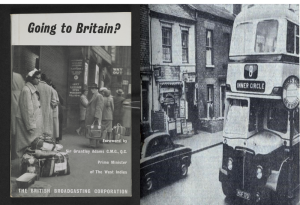
The stop for the number eight, right outside the shop, had proved an extra boon, with passengers nipping in for cigarettes on their way to work and dropping by for a bag of sweets and the local paper as they alighted in the evening. Today, Saturday, there’d be the added custom for the Sports Argus, the pink newspaper rushed out from Colmore Circus at teatime with all the results and scores from the day’s sport. Demand in the summer months dropped a little, with no clamour for the football results and the ever-hopeful check on the pools’ coupon that went with them. All the same, it still sold and still brought people into the shop who maybe departed having spent a few pence more once inside.
Thomas’s brothers – John and Harold – had long since married and moved out of the family home round the corner in Wrentham Street. Bachelor Thomas, 47, happily shared the new house in Lee Bank with his mother Louisa, running the small business from its front room. Her sight was deteriorating quickly, but she was still able to serve regulars and keep the shop and the small house neat and tidy. John Bates, still local, would often walk round from Sun Street, popping his head round the door for a quick chat and a cup of tea. Most Saturdays, he would mind the shop while Thomas took his mother for an evening drink at the nearby Welcome Inn.
The routine of this first Saturday in June had already been put out of joint. Although Thomas usually enjoyed nothing more than the twenty-minute stroll down the Pershore Road to the county cricket ground at Edgbaston, the chill weather of late Spring made it a less attractive prospect. And it wasn’t his beloved Warwickshire playing, either, but a Test match – an international match – between England and, not India, but Pakistan. And Thomas was right: they weren’t much cop, to be honest. It was a one-sided affair between two mismatched teams. Besides, much of it would be broadcast live on the telly and once his mom and Sally had tired of the pomp and ceremony, he’d be able to catch an occasional look at what was going on.
And so it tuned out. In the cosy, fusty back room, Louisa and Sally, having chattered cheerfully through the TV coverage of the event marking the Queen’s official birthday, were happy to sit in supine, blank contentedness as John and Thomas Bates watched the live coverage of the cricket. One of them would occasionally nip into the shop to serve, return, light a cigarette and maybe pass desultory comment on the events on television. The afternoon drifted by. Thomas made cups of tea, Lousia cut cheese sandwiches at lunchtime. A coal fire kept low vigil as true summer refused to arrive. Pakistan’s cricketers looked as though they would manage to stave off inevitable defeat until the next day’s play. Afternoon drifted into early evening.
‘You taking mom and Sally up the Welcome?’ John asked his brother.
Thomas looked enquiringly at his mother. He had a sense that having established herself early on to watch TV in the morning – a departure from her usual behaviour – she might take some shifting this evening. He noticed that she, in her turn, looked over at her companion. The TV flickered on: the day’s dull cricket was drawing to a close. Louisa was unconvincingly hesitant. She looked over at her friend.
‘What’s on after the cricket, Sal?’
‘Thank Your Lucky Stars or Juke Box Jury. Helen Shapiro’s on – and that Terry Thomas. He’s a right laugh.’
Thomas and John exchanged a glance and a smile. This looked like a preconceived plan of inaction on the part of the two old women.
‘Perry Mason later too, isn’t it?’ the disingenuous enquiry from Louisa.
‘So it is. Yes, it is. Yes – Saturday. Perry Mason.’
The brothers saw which way the wind was blowing. Having taken root on the well-worn two seat settee, with the room warmed and some TV favourites soon on offer, with the day almost done and only an hour or so more until they closed up shop, even the allure of a couple of drinks in the cheery smoke of the Welcome Inn was diminishing by the minute for settled Louisa and Sally.
Not so for John Bates, for whom it was a bit of an unexpected bonus. He’d hang on until the end of play and as Thomas would not be leading the usual outing to the pub, meaning his services weren’t required to mind the shop, he’d take the opportunity to drop in at the Welcome himself before the short stroll home for his tea.
The cricket broadcast finished, the chirpy jingling that introduced Juke Box Jury followed and John Bates took his leave. He saw himself out. His brother, mother and her companion remained in the comfortable torpor of the living room. The shop bell jangled as he left.
And did so again a few moments later. Thomas rose uncomplaining from his chair. Every packet of fags, every chocolate bar, every periodical and, at this time on a Saturday, every Argus put a coin in the cashbox to secure the present and future needs of Thomas and Louisa Bates. This son needed no reminder of his filial responsibilities.
Sleek, smooth and handsome, TV host David Jacobs began to introduce the jurors who would be giving their jolly verdicts on that week’s new music releases. Louisa and Sally, both born over a decade before the death of Queen Victoria, both with memories of how two world wars had shredded so much of the fabric of society, both of whom had known lives of cold-water, aching-limbed, hard scratching labour interspersed with fraught childbirth – and both of whom who knew that disappointment was etched into their very existence – marvelled still, always, at the undemanding, generous and expansive world supplied to them by television. Whatever they didn’t know or understand from this changing world, they could still allow to wash warmly over them. They sat, content.
Until, through the door connecting living room to shop front, they felt the commotion almost as much as they heard it. The sound of a pop, a sort of muffled bang of a car outside backfiring, perhaps. Then from inside, the crash of the stout sweet jars tumbling from the shelves, the clatter of the wooden stool behind the counter being kicked away from its place, the thump of a deadweight as it hit the floor. Indeterminate scraping and scrabbling from beyond the door and then, incongruous even before the events of the previous half-minute were revealed, the cheeky tinkle of the shop bell. Louisa shot a fearful glance towards her companion. Not again, her eyes said.
Two years earlier, Thomas, usually cheerful and in good health, had surprised them all when he was admitted to hospital suffering with an ulcerated stomach. Modern surgery and the improved pharmaceutical provision of the still fledgling National Health Service had nursed him back to health. Cautioned against heavy lifting and over exertion, he generally exhibited a happy disregard for such unnecessary solicitude. All the same, his brother John kept a surreptitious eye wherever he could to divert his brother, intent on proving himself as fit and well as anyone by unloading stock and dealing with deliveries of the newspaper bales, especially the increasingly plump ones of a Sunday morning. Thomas, unfussy and genial, merely got on with the routine of daily life.
But now, Louisa knew, the pain had attacked again, just as they had feared it might. She lifted herself from her seat and nervously edged open the door to the shop. There, in the confined space, on the floor between the counter in front and the shelves behind, Thomas had slumped to a sitting position. His back was propped against a cupboard door, his legs twisted to his left and his head, eyes alarmingly open, had dropped to his right shoulder. There was blood on the floor. Near him lay the open cash box used for coins, not the notes that went into the till. A few coppers and the odd sixpence were scattered about. His mother cupped her hands to her mouth, stifling the scream within her. As she did so, her friend slipped gingerly to her side and placed her arm across her shoulders.
It was Sally who first bent towards the lifeless body of her friend’s son. And as she did so, as she stooped towards the body, looking so cramped and uncomfortable in its contorted, restricted position, it was she who was unable to contain the cry within her. She reached towards the motionless body, placing one hand on its left shoulder as with the other she felt hesitantly at the tear in the fabric of Thomas’s shirt, just above his heart. She craned her disbelieving face to look at the immobile figure of Louisa, her hands still covering her face, her body convulsively trembling.
‘Lou, love. Lou. He’s been shot.’
Louisa could find no response. She remained still, her widened, startled eyes now reddening and rimmed with tears. She remained immobile as her friend, herself dazed and disorientated, made her way to the living room to call 999…..and ask for who? For what? On those plays on the TV, they always seem so clear and composed when on the telephone. For Sally Hodgkinson, using the device was still a rarity. She was ill-prepared for the brusque efficiency of the call operator. Which service did she require? She didn’t know. What was she supposed to answer? She froze into silence before being prompted by the simpler question.
‘Can you tell me what’s happened?’
‘He’s been shot. In the shop. Thomas Bates. Shot.’
Enough to put things in motion. Within moments, police cars, ambulances and, inevitably, neighbours and passers-by, gravitated towards the premises of L. Bates and Son at 196 Lee Bank Road. Still broad daylight as 7 o’clock approached, local residents were afforded a clear view as a stretcher was borne from the shop front into a waiting ambulance. A weeping woman was assisted into the vehicle which sped on its way almost before the rear doors were closed.
In the doorway of the shop, a uniformed policeman now stood sombre guard as an assortment of men, themselves sporting a uniform of sorts – gaberdine coats and variations of trilby hats – made their way on and off the premises. One of their number chose not to enter the shop, but to focus his attention on the small crowd that had gathered. Had they seen anything suspicious? Noticed anyone hanging around? Spotted any unusual behaviour? This early shot at information gathering – the golden hour, as it was known – was fruitless, but Detective Chief Superintendent Gerald Baumber was already banking on the solving of this crime and adding it to his growing and impressive record.
The news had reached John Bates as he was enjoying his pint at the Welcome with his 22-year-old son, John junior. Rushing round to the shop and pushing their way through to its entrance, there was little for them to see other than the mess left by Thomas’s fall. John ventured further into the shop alone. There, by the wall behind the counter, a brown-coated official was using a small tool to dig away at the disturbed plaster, extracting various fragments as he did so. Not appreciating who had just entered, Charles Hill from Birmingham Police Firearms Department proudly displayed the bullet and casing he had just dislodged.
‘Must have gone straight through him,’ he proclaimed with professional satisfaction.
Too stunned to react in any meaningful way, John Bates dully took in the scene around him. For reasons that, in the weeks and months to come, he could scarcely fathom, two things crossed his mind. He could see the contents of the petty cash box strewn about, but what of the till? He pushed on the ‘no sale’ key and there, neatly compartmentalised, sat the bigger coins, the florins and the half-crowns. The few notes, mostly the brown, ten-shilling ones, remained safely anchored under their metal spring. His sense of his own relief appalled him. Then the second nag surfaced.
What of next day’s morning papers? They were too big a money-spinner just to abandon and, just as importantly, regulars shouldn’t be let down. He knew sorting them in the shop in its current disarray would be impossible, but as long as it stayed dry, he, John junior and his younger son, George, could use the low garden wall abutting the shop to do so. Even as he began to make such arrangements in his head, John Bates felt another unidentifiable shadow of reproach clouding upon him.
As the ambulance sped towards the General Hospital in Steelhouse Lane, the doctors at the side of Thomas Bates succumbed to the inevitable. The gunshot that had passed through his heart, lungs and liver had killed him instantly, their efforts nothing more than proper, noble professionalism. Louisa, perching uncomfortably on the seat by his corpse, kept her still, stunned silence and held on to the hand of her child.
When dawn broke on the morning of Sunday 3 June, John Bates and his sons made their way to the shop. The doorway policeman, weary and aching on his watch, nodded gravely at them, only too pleased with some human contact. The great bundles of newspapers, deposited as Lee Bank slept or, in some cases, as they began to think of making their way home from Saturday night revels, squatted by the wall. The copper could see no reason why John could not step inside and fetch the order book, which he duly did while his offspring cut the sisal bindings and began the preliminary sort. Within an hour, just as the paperboys began arriving, the makeshift counter of next door’s garden wall and the pavement below it bore the scandal, the kiss-and-tell, the political chit-chat and film-star gossip that would entertain the good citizens of that corner of Edgbaston and Balsall Heath on that day of rest.
It would be no day of rest for DCS Gerald Baumber, up and on the scene even as the first weighty bag was slung across a delivery boy’s shoulder. He had a crime to solve and a name to make. As the crowds had gradually dispersed that previous evening, he had picked up some murmurings, nothing more, on what had been seen. One of these coloured chaps had been hanging around, some people seemed to think. There had been mention of a man jumping hastily, guiltily even, onto a passing number eight bus. Somebody had been spotted running towards the Bristol Road.
Baumber was, by now, the veteran of several murder investigations. Just three years ago, then the protégé of the wise and wizened James Haughton, he had been part of the team who had apprehended Patrick Byrne for the ferocious murder of typist, Sidney Stephanie Baird in the YWCA in Wheeleys Road, just round the corner from Lee Bank. Byrne’s obvious insanity had spared him from the gallows that Baumber and his colleagues were convinced were his due. It would be good to see if the force could garner some recompense by quickly locating and charging the killer of gentle Thomas Bates.
Byrne, dubbed ‘the blood-stained man’ by gleeful TV and press coverage, had made his notorious escape from the scene on the number eight bus. It had been quite a feature of the coverage of the successful police operation to detain him. Baumber, surveying his surroundings, caught sight of the bus stop just a few steps from the shop. He hadn’t got much from the local chatter last night, so what was to be lost by attempting this tried-and-tested method? He prepared himself for a busy few hours.
